- Start with the adjoining surfaces and finished levels.
- A flexible edge is not automatically a retaining edge.
- Fixing, bedding, haunching and compaction are part of the detail.
- Material, coating and cut-end treatment affect durability and appearance.
Start with the interface
List the materials on both sides of the edge, their construction depths and the intended exposed face. Resin-bound surfacing against planting, asphalt against paving and gravel beside lawn impose different requirements on the profile and support.
Resolve drainage, movement joints, service covers, thresholds and changes in level at the same time. The edge should support the surface detail rather than hide an unresolved junction.
Choose the product mechanism
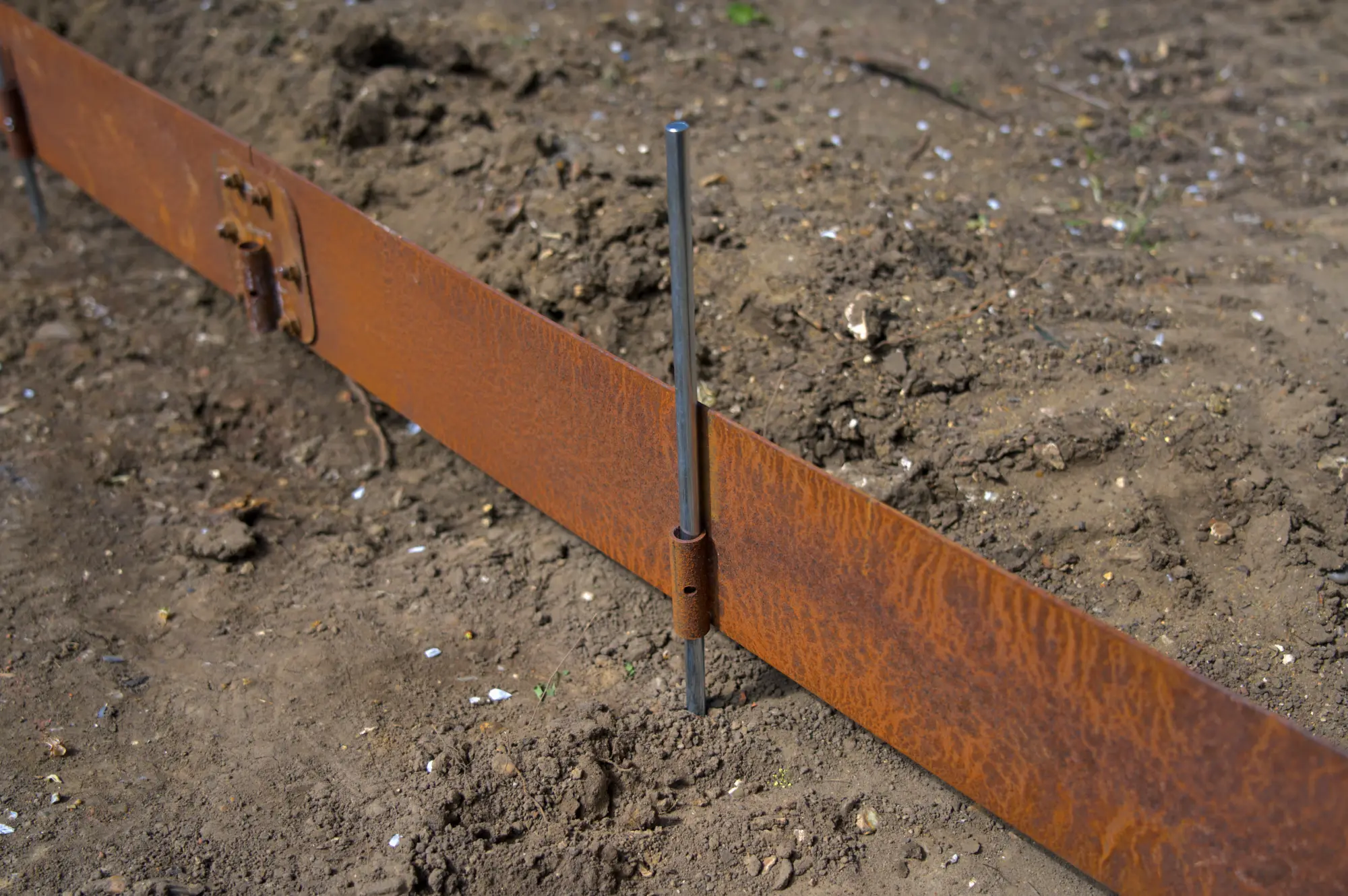
CORE PRO EDGE is an anodised aluminium range with profile heights for hard and soft landscape interfaces. CORE DATUM EDGE is a heavier adjustable steel system for precise commercial lines and levels. CORE EDGE and CORE EDGE HD are flexible steel routes with integrated spikes for compatible ground-fixed applications.
Material alone does not decide the product. Profile depth, foot or spike arrangement, connector, desired radius and construction sequence determine whether the selected edge can be installed and supported correctly.
Coordinate curves, joints and movement
Confirm the minimum practical radius and how the profile forms it. On CORE PRO EDGE, selected rear tabs are removed for curves and retained for straight runs. Long exposed aluminium runs beside hot-applied surfacing require the published movement gap and temperature controls.
Joints should remain aligned and supported without creating a visible step. Changes in direction, termination points and connections to rigid kerbs need deliberate details rather than site improvisation.
Protect the edge during construction
The edging should be continuously supported and fixed before the adjoining surface is compacted. Heavy rollers, delivery traffic or side loading can deform an otherwise suitable profile if the construction sequence is wrong.
Record the approved profile, finish, fixings, bedding or haunching, movement gap, cut-end treatment and inspection points in the project information.
- Adjoining surface types and depths
- Required face height and line tolerance
- Straight runs, curves and minimum radii
- Substrate, fixings and compaction sequence
- Finish, exposure, joints and cut-end treatment
Evidence used for this guide
Questions about landscape edging
Is CORE PRO EDGE suitable beside hot macadam?
Yes, within the published installation limits. The current guidance states a maximum 180°C material temperature, a 4–6 mm joint gap and an initial roller pass approximately 50 mm clear of the edge.
Can landscape edging retain raised ground?
Only within the verified landscape-edge scope. Significant retained height, surcharge or fall risk needs a separately designed retaining solution.
Which edge is best for precise levels?
CORE DATUM EDGE is the adjustable steel route designed around fine level control. The full interface, fixing and retained height still need checking.