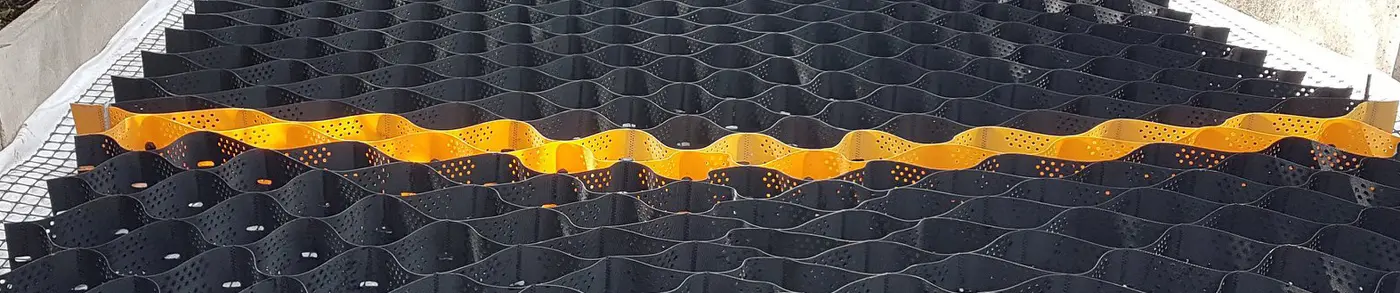
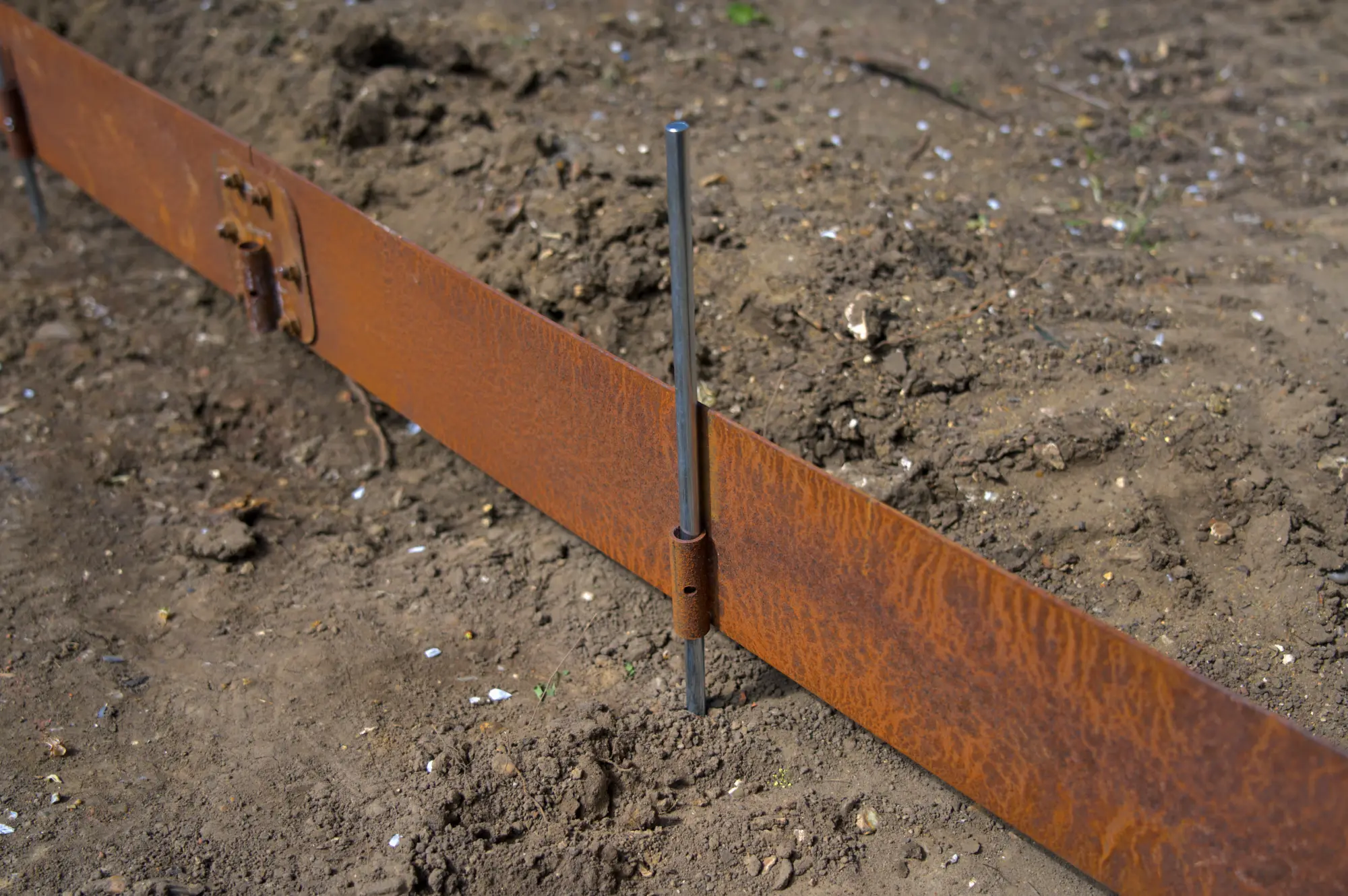
- Geocell is a physical product, not a complete design by itself.
- Its cells confine compatible infill in three dimensions.
- Depth, infill, support, restraint and drainage are selected around the application.
- The same product family can sit within very different project systems.
The basic principle
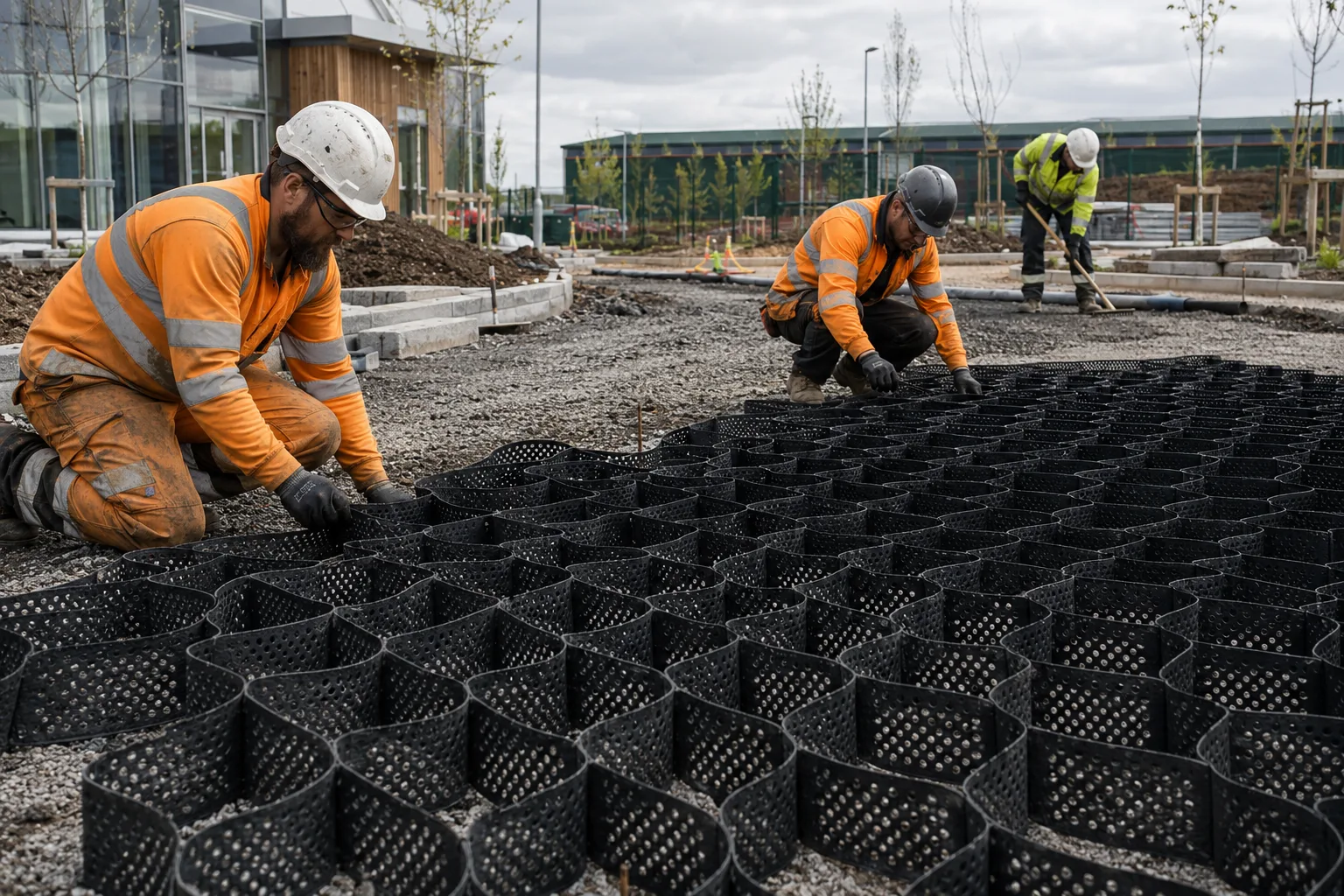
A geocell panel is expanded to create a regular network of connected cells. Aggregate or soil is placed into those cells and compacted or finished as the application requires.
Without confinement, granular material can spread laterally when it is loaded. The cell walls limit that movement and help distribute load through a wider area. On a slope, the same cellular structure can help retain selected infill at the face.
Common geocell applications
Geocell is useful where control of the infill matters. The surrounding layers and details change considerably between a road, an access track, a permeable car park and an embankment.
- Base and sub-base reinforcement over weak or variable ground
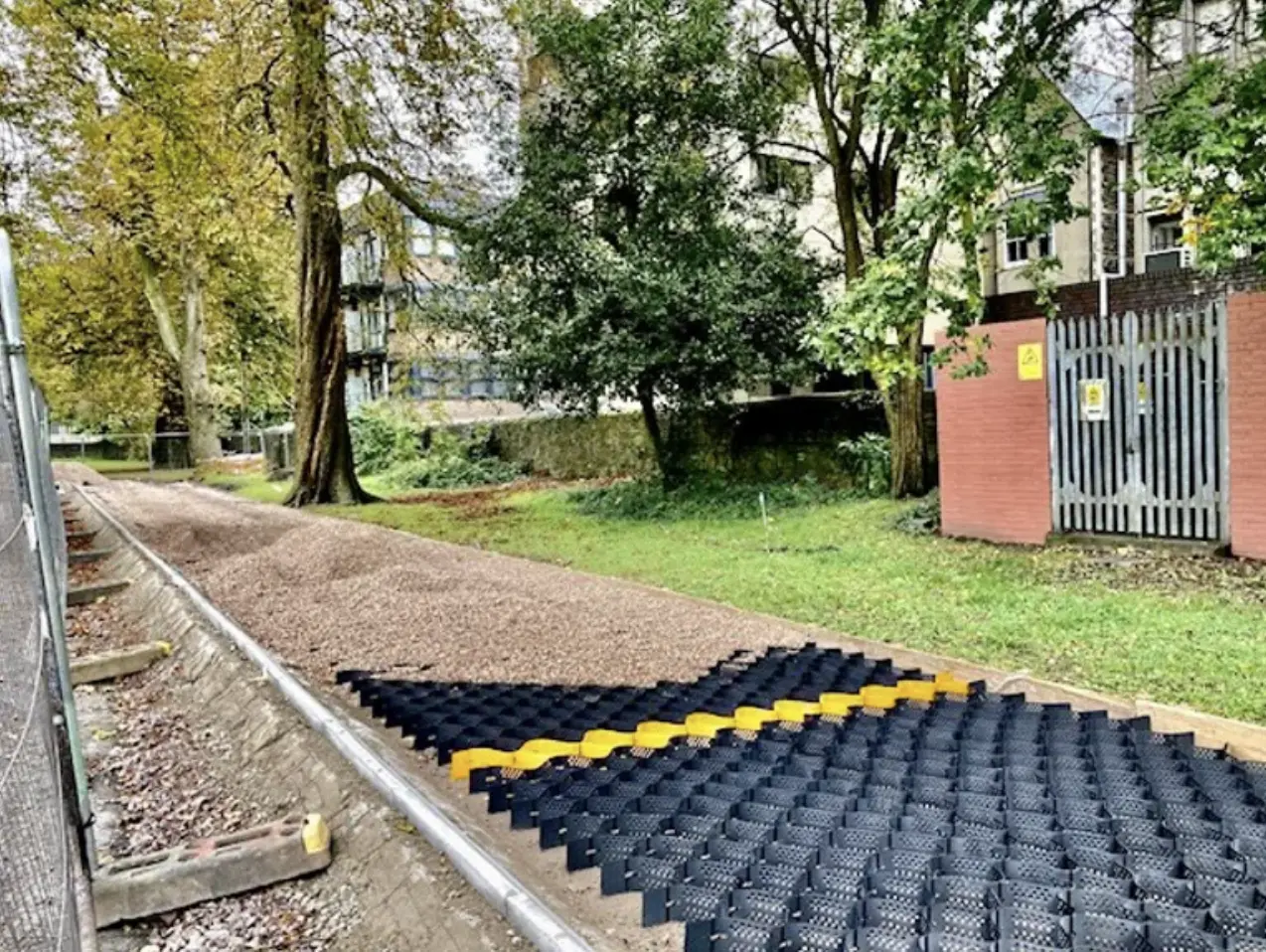
- Temporary or permanent access routes and working areas
- Permeable parking and hard landscape build-ups
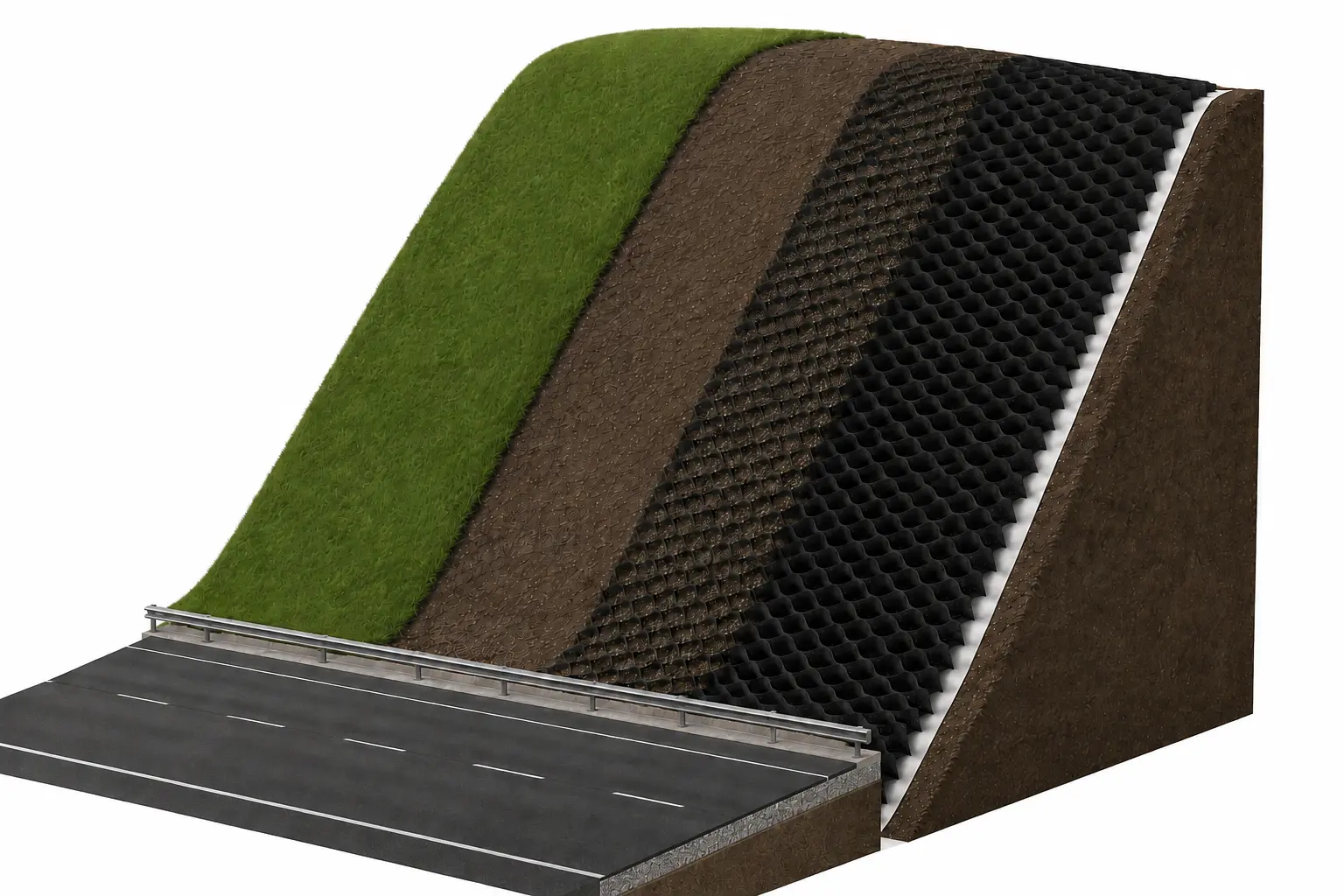
- Surface erosion control on slopes and embankments
What sits around the geocell?
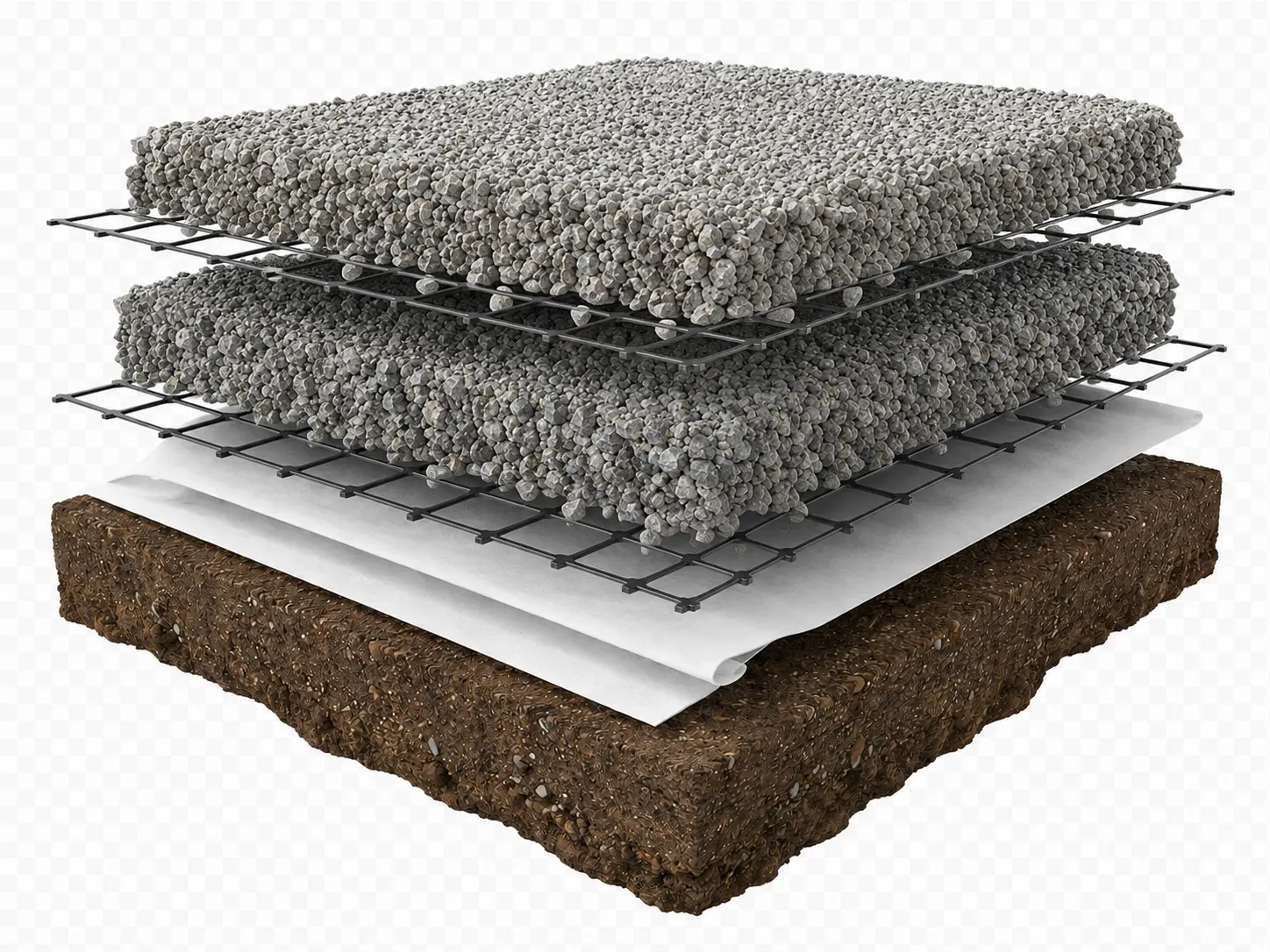
A geocell build-up may also use a geotextile for separation or filtration, a geogrid for additional granular reinforcement, anchors or tendons for restraint, and a selected surface or vegetation system.
These supporting products are not part of the geocell itself. They are included only when the project needs the function they provide.
How a geocell is selected
Selection is based on what the cellular layer has to do. Ground conditions, loading, geometry, water, infill and construction constraints all matter. A cell depth used on one project should not be copied into another without checking those inputs.
- Ground condition, CBR or slope profile
- Loading, trafficking and design life
- Available build-up depth and levels
- Infill grading, availability and compaction
- Drainage, edges, anchorage and interfaces
What geocell does not do
Geocell does not remove the need to understand the formation, drainage or load. On slopes it provides surface confinement, not proof of global slope stability.
Evidence used for this guide
Questions about geocell
What is geocell made from?
Material and construction vary by product family and current grade. Ask CORE to confirm the product-specific technical information before the material is stated in a specification.
What can geocell be filled with?
Depending on the application, the infill may be selected angular aggregate or soil. Compatibility, grading, placement, drainage and the required finish must all be considered.
How deep should geocell be?
There is no universal depth. The selection depends on the application, formation, loading, infill, geometry and restraint. Confirm the available product grades and depths before selection.