- Do not cover weak ground before its condition is understood.
- Separate the formation where contamination is a risk.
- Choose reinforcement by mechanism and design need.
- Drainage, edges and construction quality influence performance.
Start with the formation
The support beneath the granular layer is the starting point. Visual condition, proof rolling, CBR or geotechnical information can all help define what the formation is likely to do under construction and service traffic.
Soft spots, pumping water or uncontrolled fill should be addressed rather than hidden. If ground information is limited, record that uncertainty and agree what testing or contingency is needed.
Define the loading and life
A lightly used landscape path and a construction access route place very different demands on the build-up. Vehicle types, axle loads, repetitions, turning, braking and the intended design life all influence product and aggregate selection.
Temporary access still needs design. Construction traffic can be severe, particularly when the formation is wet or vehicles follow the same wheel paths repeatedly.
Give every layer a job
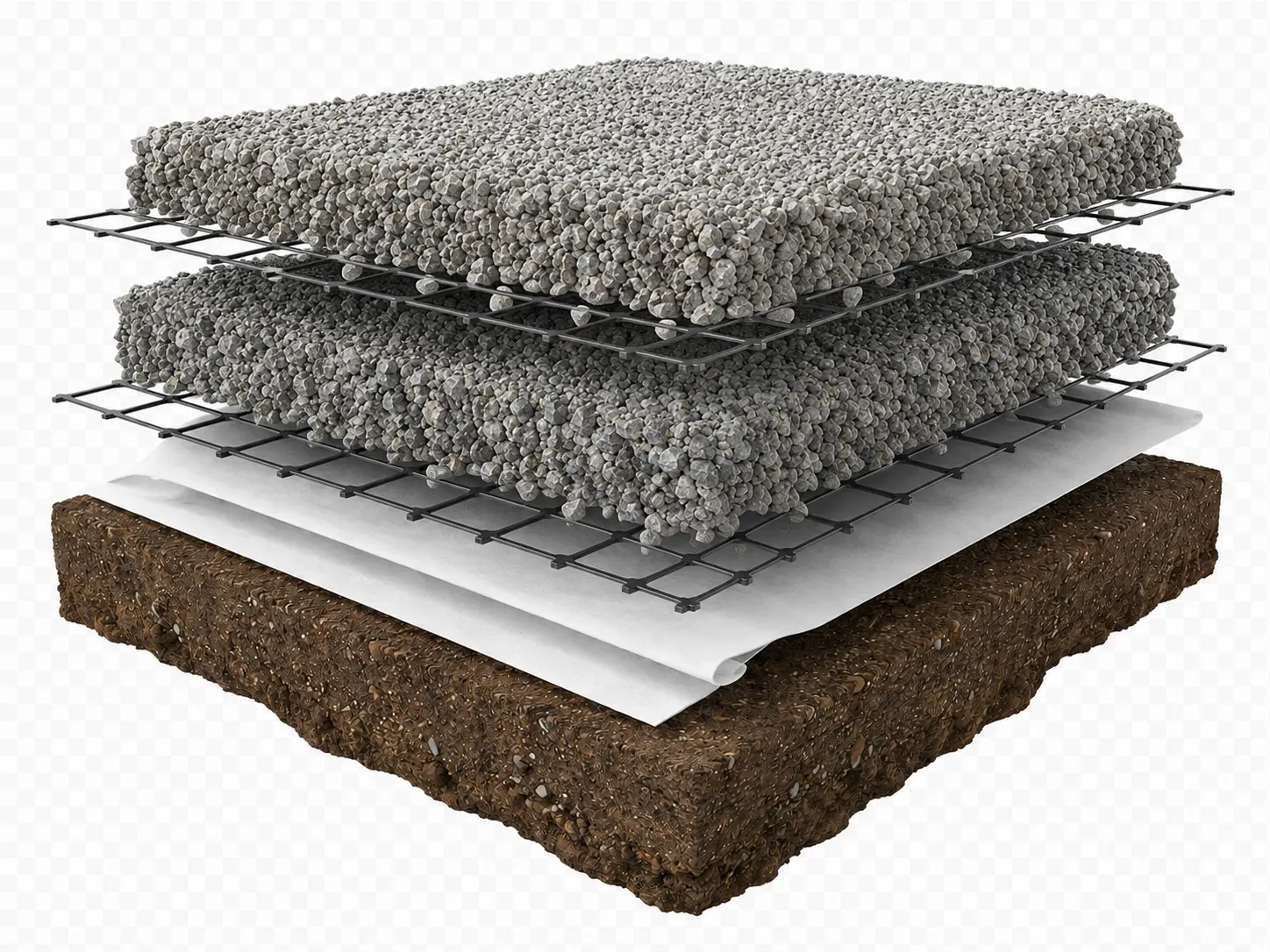
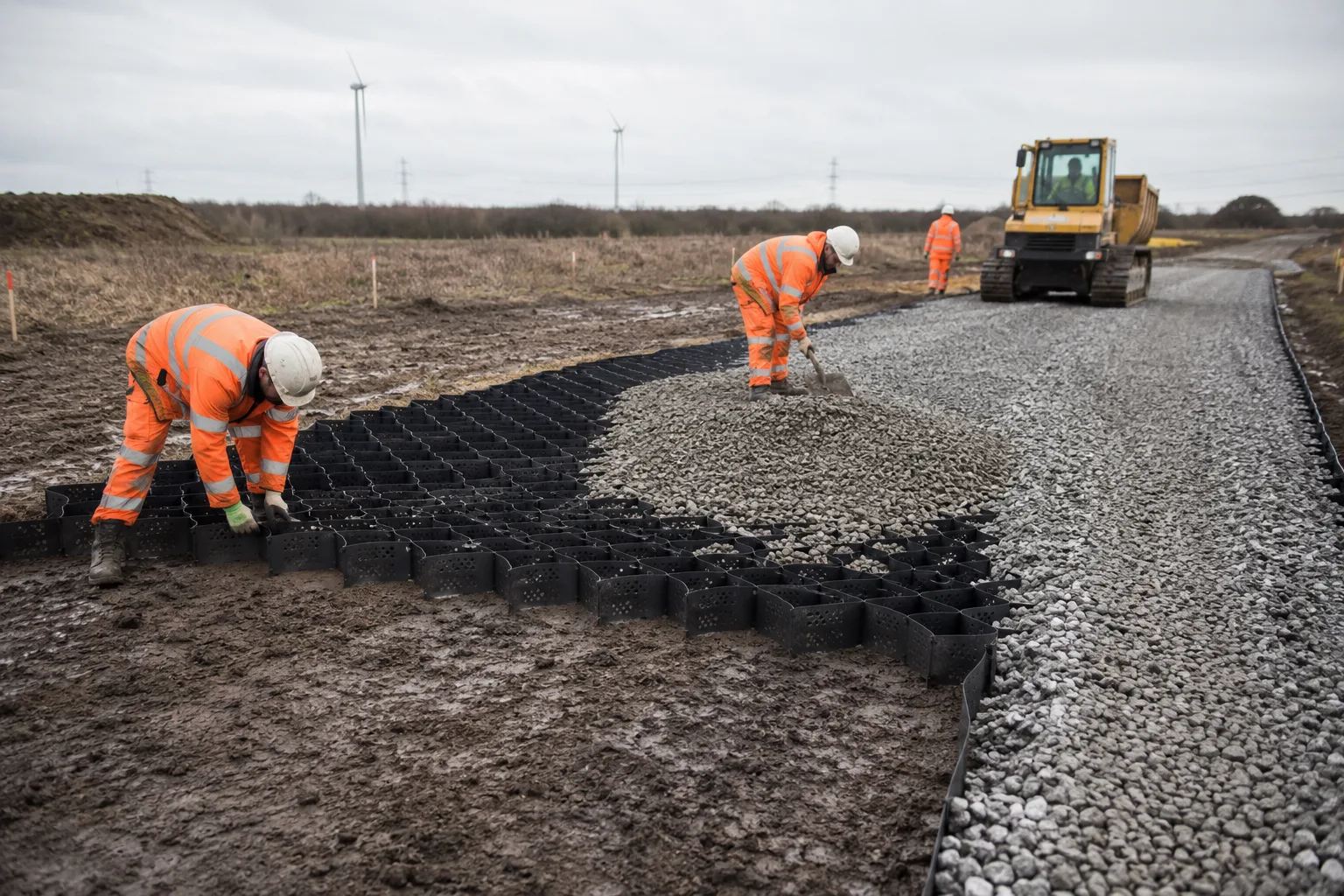
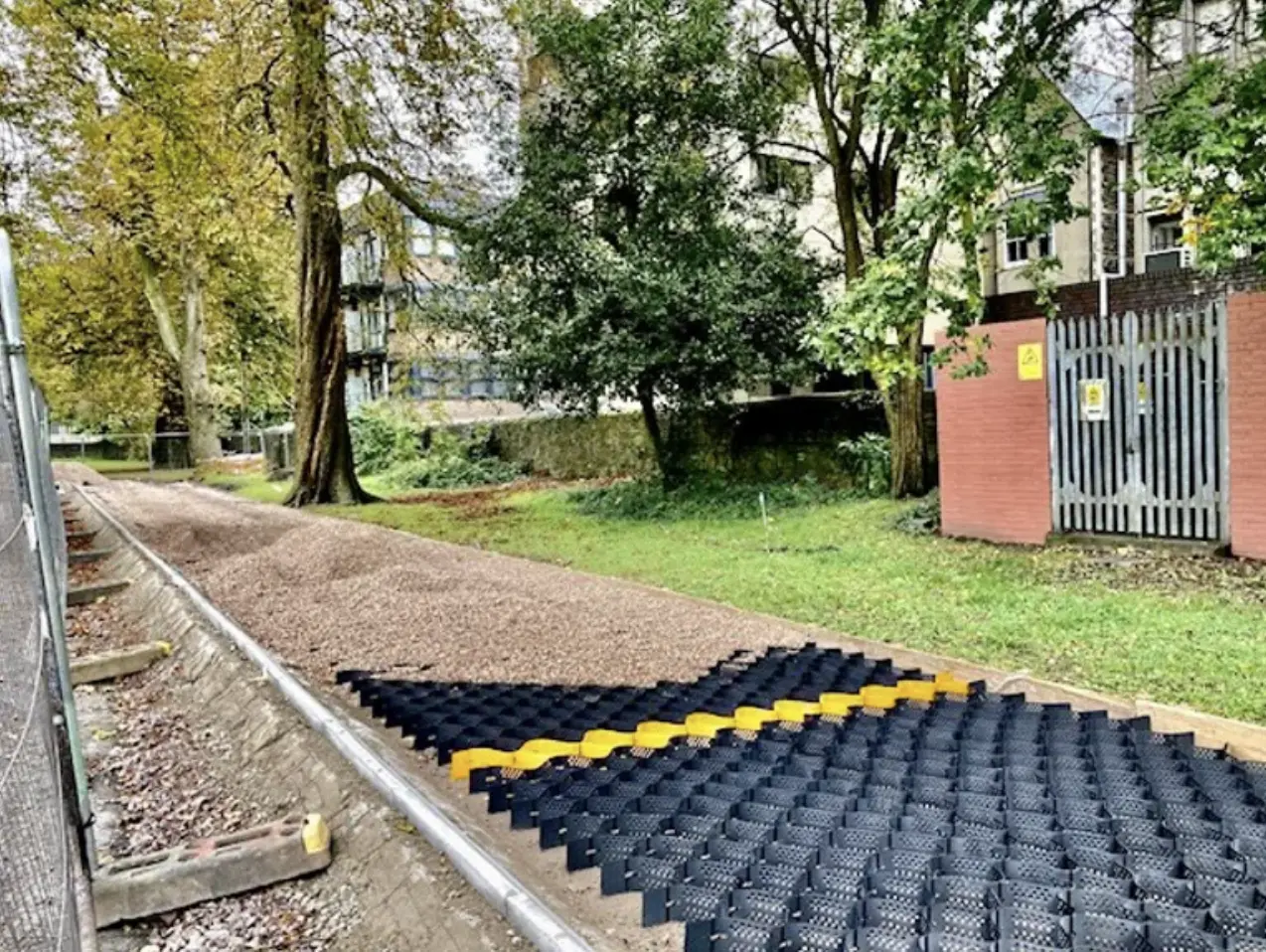
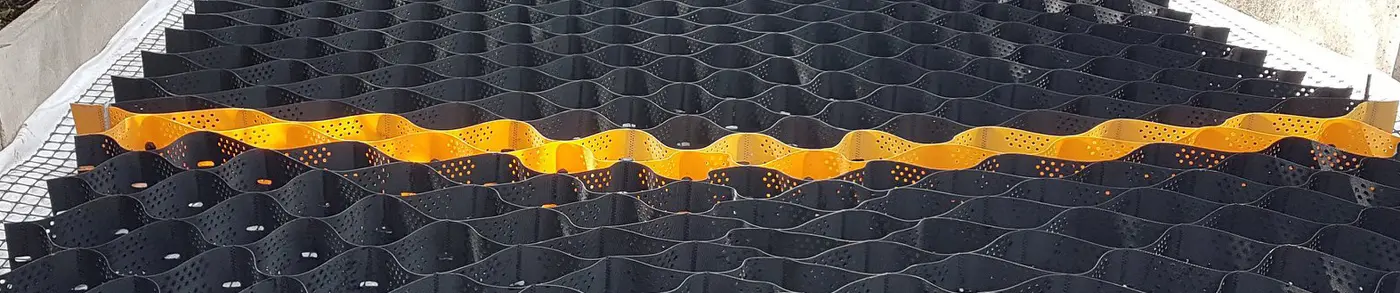
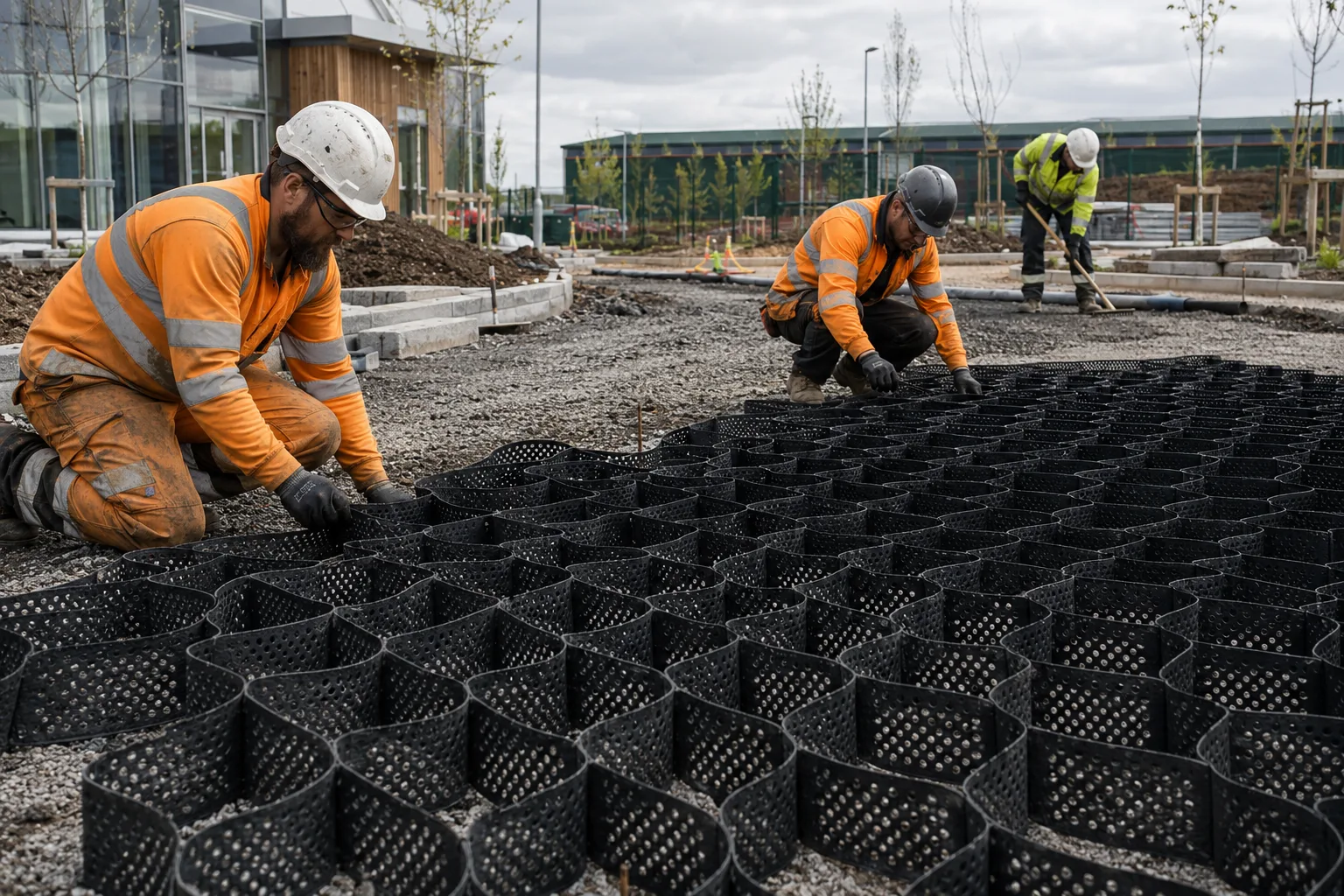
A geotextile may separate the aggregate from the formation. A geogrid may provide planar reinforcement through aggregate interlock. A geocell may confine aggregate within a three-dimensional layer.
These functions can complement one another, but unnecessary layers add cost and interfaces. The build-up should state what each component is doing and how it will be installed.
Check the materials and details
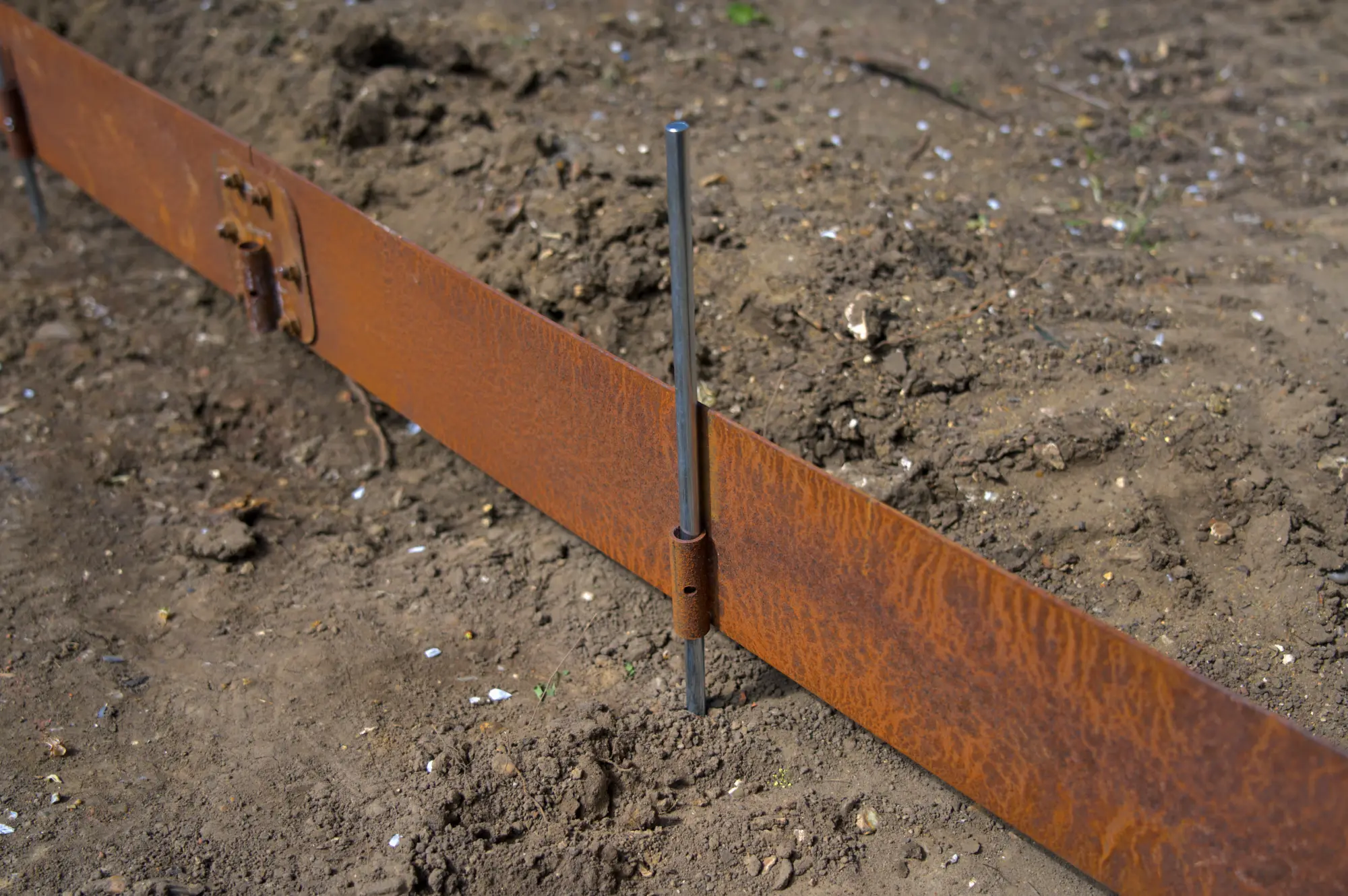
Reinforcement performance depends on compatible aggregate, correct placement and proper compaction. Edges, transitions, service crossings, drainage outlets and the finished surface also need coordination.
- Aggregate grading, angularity, moisture and compaction method
- Geotextile laps and protection during placement
- Geogrid tensioning, continuity and aggregate interlock
- Geocell expansion, connection, filling and edge restraint
- Inspection points before each layer is covered
Can reinforcement reduce aggregate depth?
Sometimes, but not as a universal percentage. Any efficiency depends on the formation, loading, aggregate, chosen reinforcement and the design method. Compare complete build-ups on a like-for-like basis and keep the assumptions visible.
Evidence used for this guide
Questions about sub-base reinforcement
What CBR is too low for geocell?
There is no single cut-off that applies to every project. Very weak or variable formation, high loads and limited depth require more detailed review and may need specialist engineering input.
Should geotextile go beneath geogrid?
It can, where separation or filtration is required. The exact arrangement depends on the products, ground, aggregate and design. Some composite products provide more than one function.
Can reinforcement remove the need for drainage?
No. Water can weaken the formation and affect aggregate performance. Reinforcement and drainage should be coordinated as parts of the same build-up.