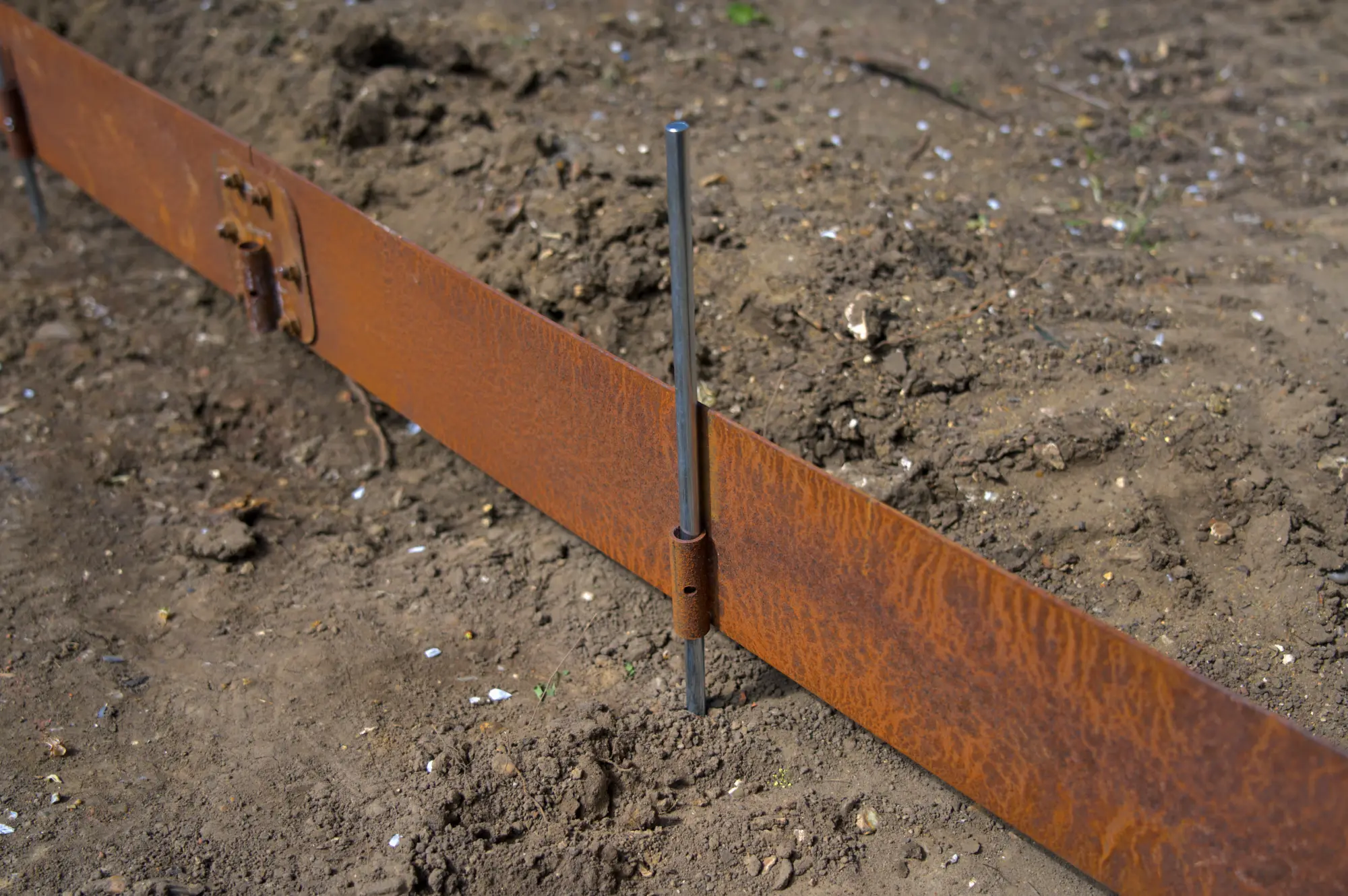
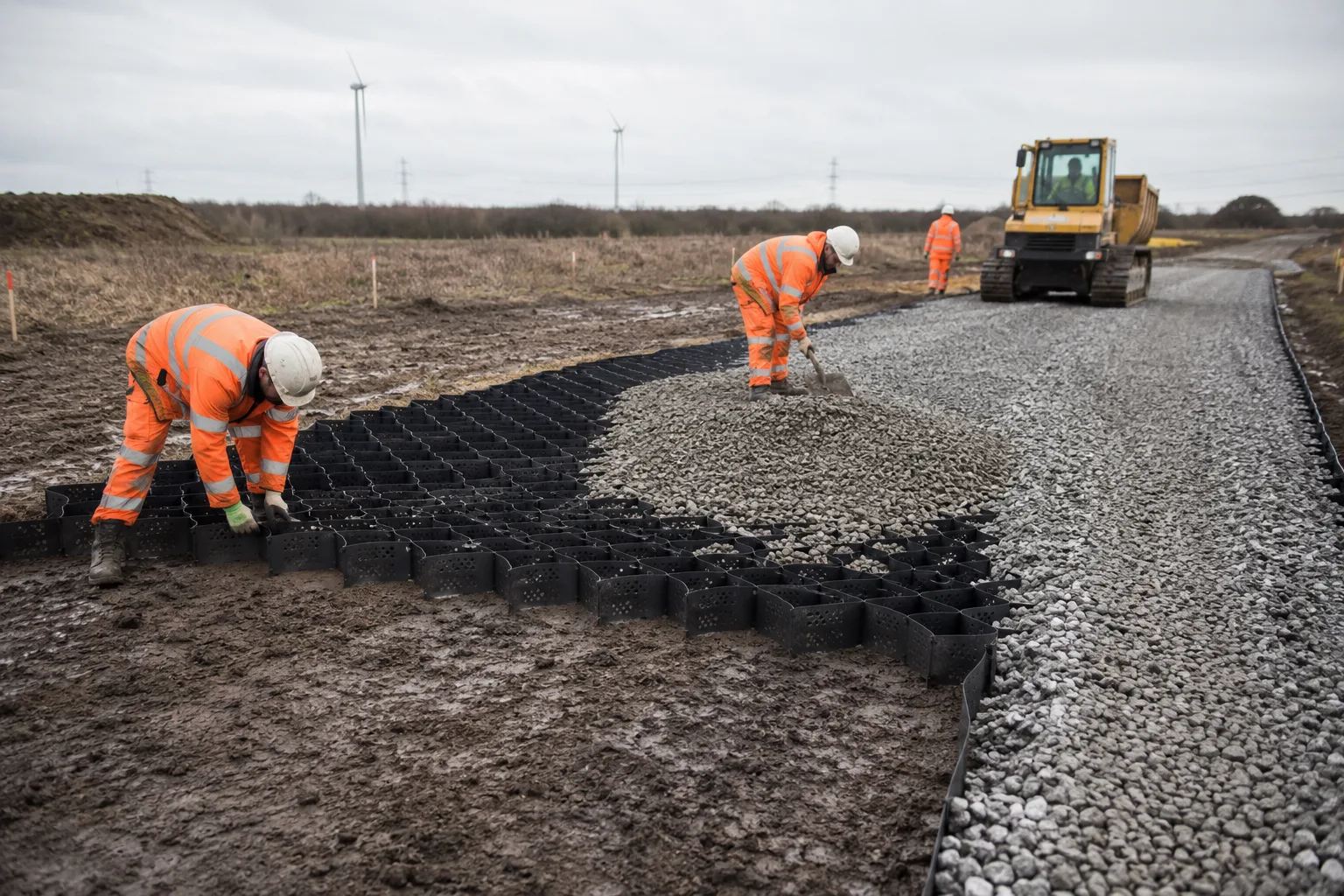
- Temporary does not mean undesigned.
- Vehicle loading and formation strength control the starting point.
- Geotextile, geogrid and geocell perform different functions.
- Construction trafficking, drainage and removal must be planned before installation.
Define the operational load
Record the heaviest expected plant, axle configuration, wheel or track contact, number of passes, turning and braking areas, route width and required design life. A delivery route used twice is a different problem from a haul road serving months of construction traffic.
Separate exceptional movements from normal use and identify where vehicles will stand, reverse or turn. Those locations can govern the design even when the straight running route appears lightly loaded.
Understand the formation
Use available ground investigation, proof-rolling observations and CBR or equivalent formation data. Note seasonal water, soft spots, topsoil, made ground and services. If the formation information is missing, that uncertainty should be resolved or carried transparently into the design.
Excavation may be acceptable on an ordinary access route but restricted around roots, archaeology, services or contaminated ground. The permitted construction method is therefore as important as the final loading.
Give every geosynthetic one job
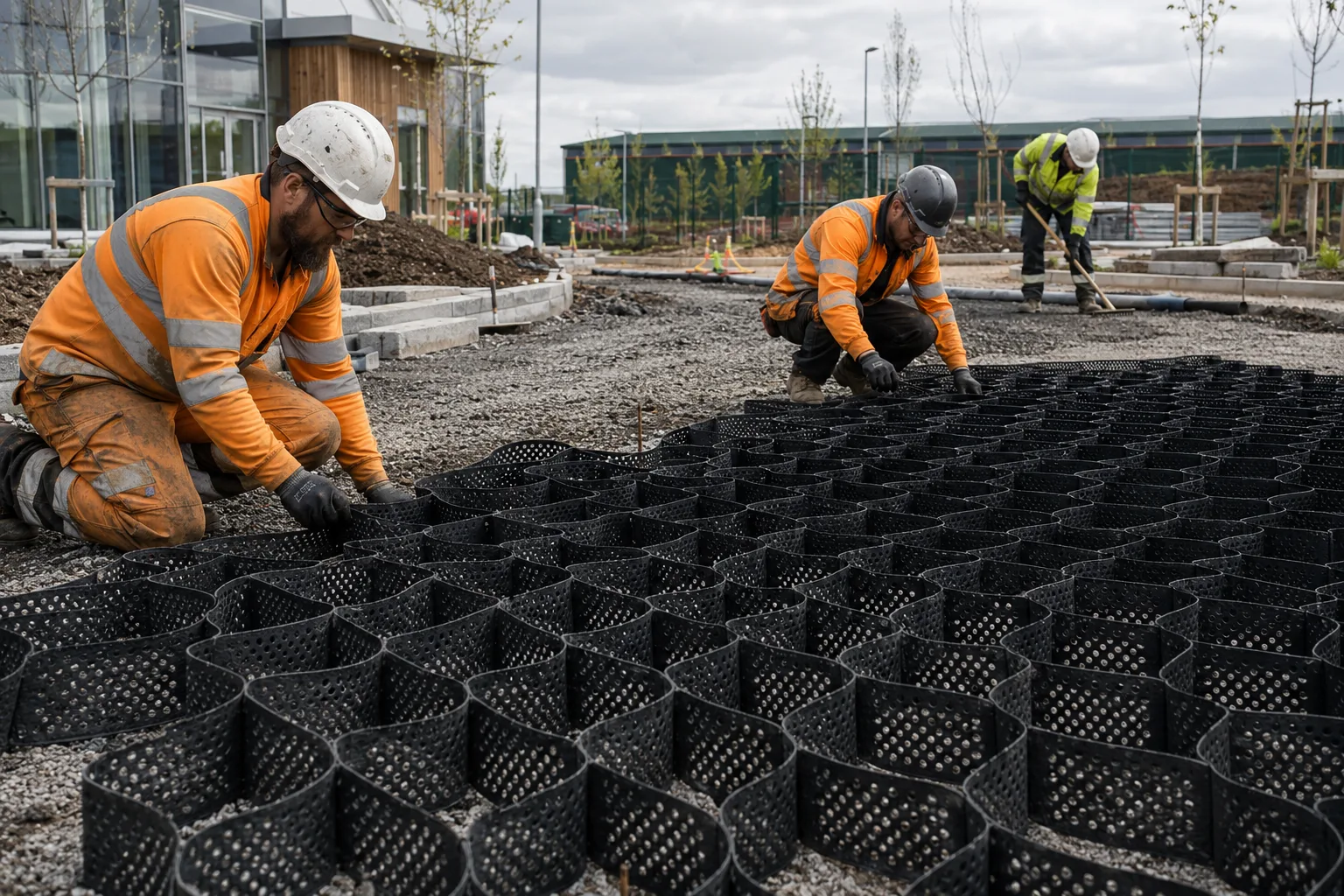
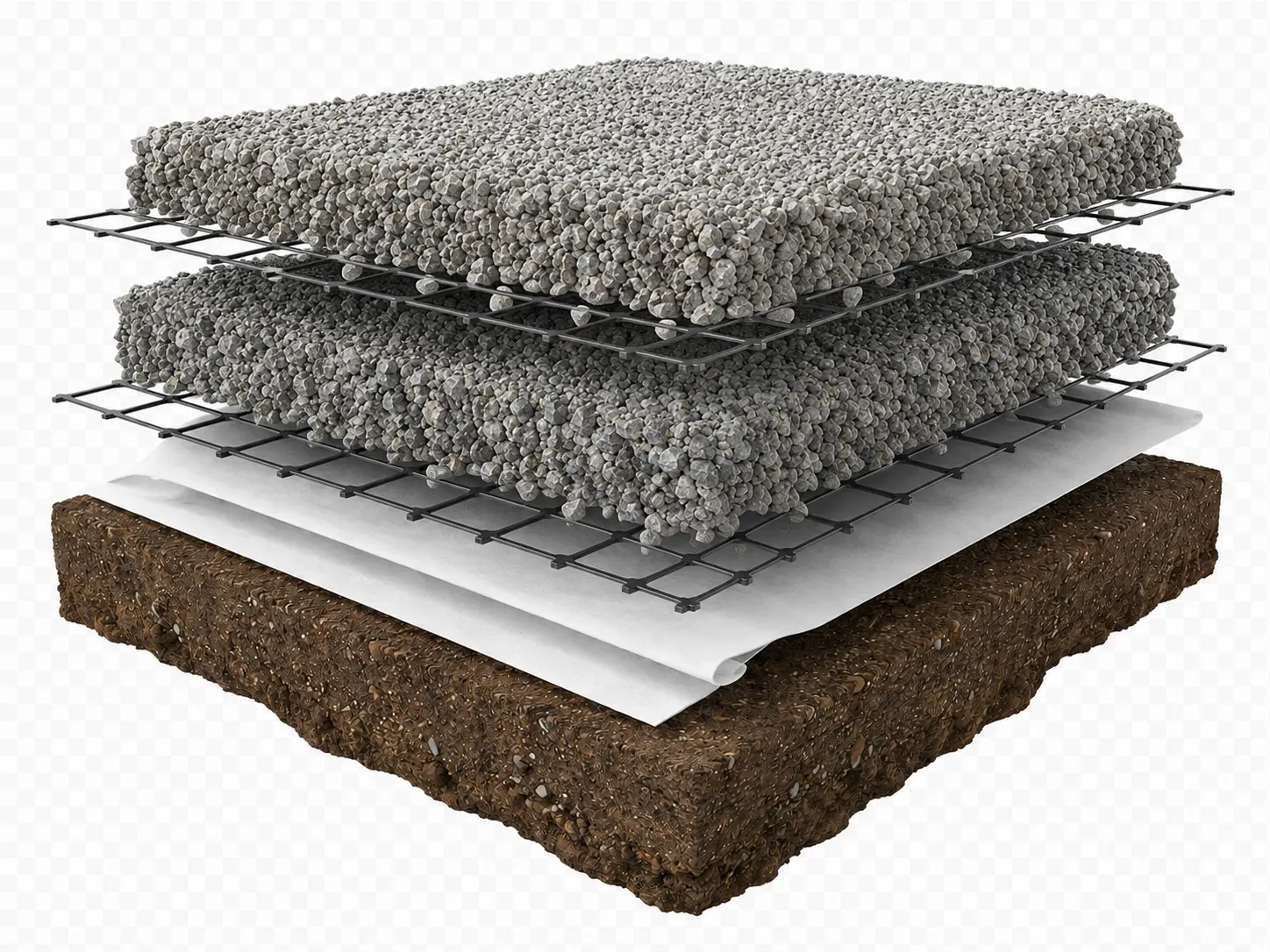
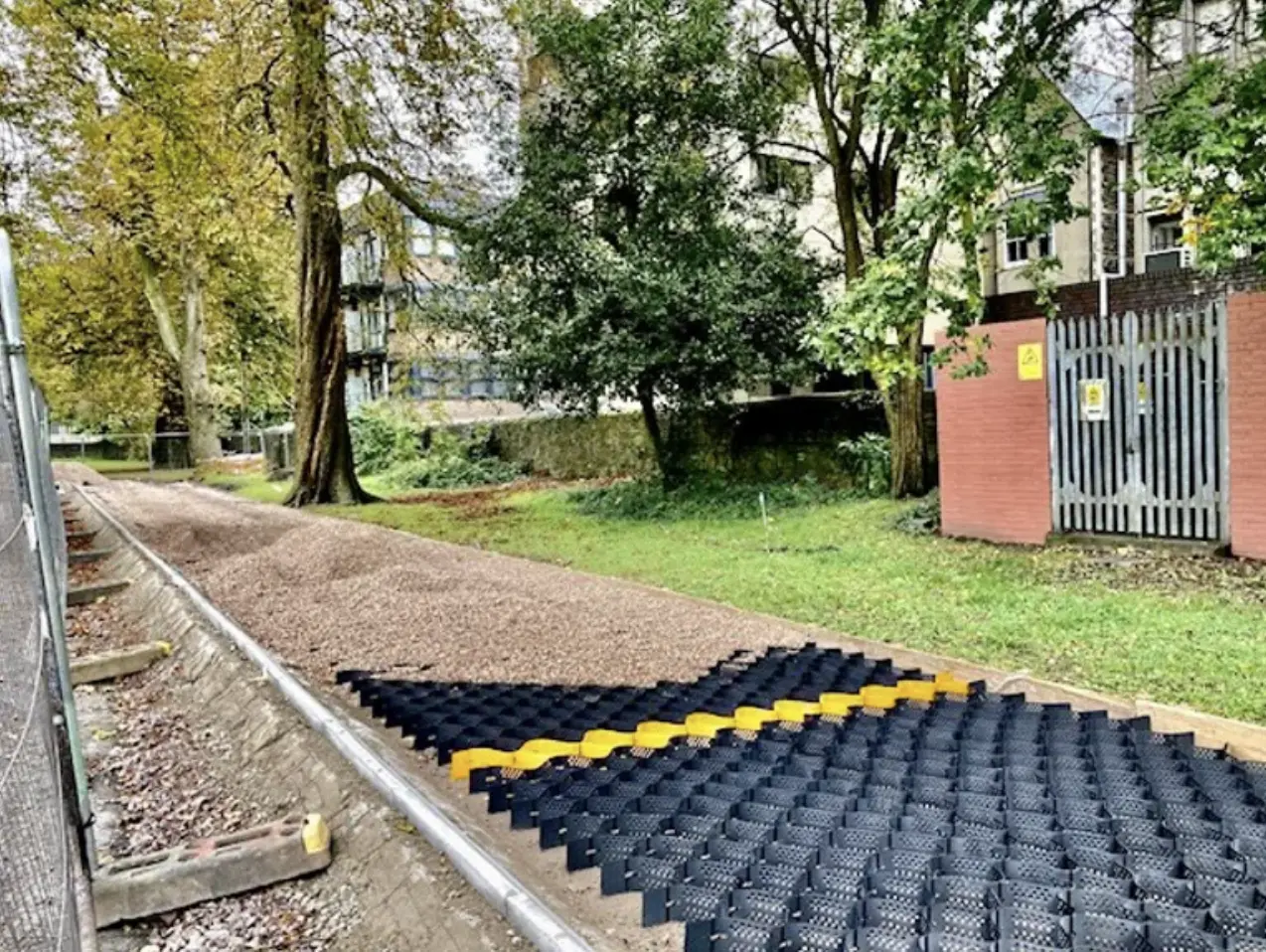
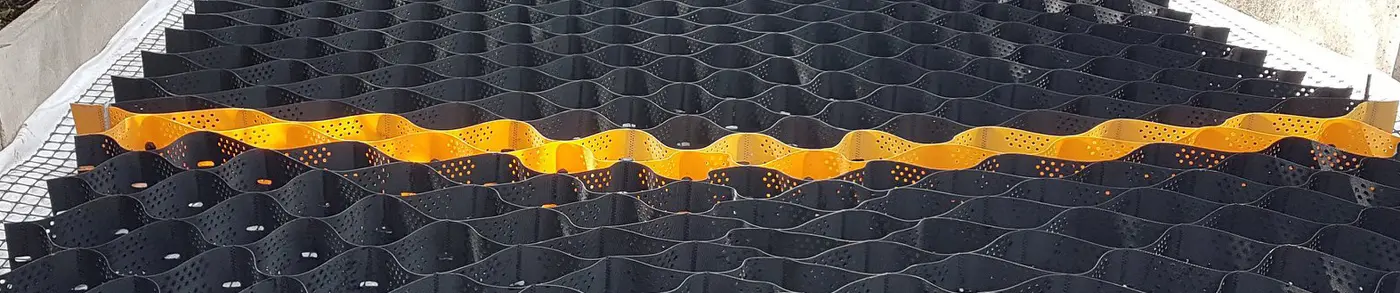
A nonwoven or woven geotextile can provide separation and filtration. A biaxial geogrid develops aggregate interlock in a planar layer. Geocell confines compatible infill in three dimensions. These mechanisms are complementary, but adding every product without a defined purpose does not create a better build-up.
Select the exact grade and location of each layer against the aggregate, formation, installation damage risk and chosen design method. Interfaces and overlaps must remain buildable under real site conditions.
Plan construction, drainage and inspection
Set out how material will be placed without rutting or displacing the geosynthetic, the maximum drop height, compaction plant, lift thickness, overfill and protection before trafficking. Include hold points for formation acceptance, geosynthetic condition, aggregate grading and completed levels.
Temporary routes still need falls, outlets and a response to silt or ponding. If the route will be removed, define how materials will be recovered and how the ground will be reinstated without creating additional damage.
- Vehicle schedule and turning plan
- Formation evidence and groundwater conditions
- Available aggregate grading and compaction method
- Required route life, maintenance and inspection regime
- Removal, reuse and reinstatement requirements
Evidence used for this guide
Questions about site access
Can geocell remove the need for a sub-base?
Not as a general rule. Geocell confines infill, but the required aggregate depth and supporting layers still depend on formation, loading, traffic and the design method.
Is a working platform the same as a haul road?
No. A working platform may need to support stationary or slewing plant and satisfy a platform-specific design and certification process. A haul road is primarily a traffic route. Some projects contain both conditions.
Can the material be reused?
It may be possible to recover aggregate or product, but contamination, damage, grading, handling and the original design assumptions must be reviewed before reuse.