- Geocell provides surface confinement, not global slope stability.
- Anchorage is project-specific and should not be guessed.
- Runoff and concentrated flow can change the design route.
- The finish and maintenance strategy influence infill selection.
What geocell does at the slope face
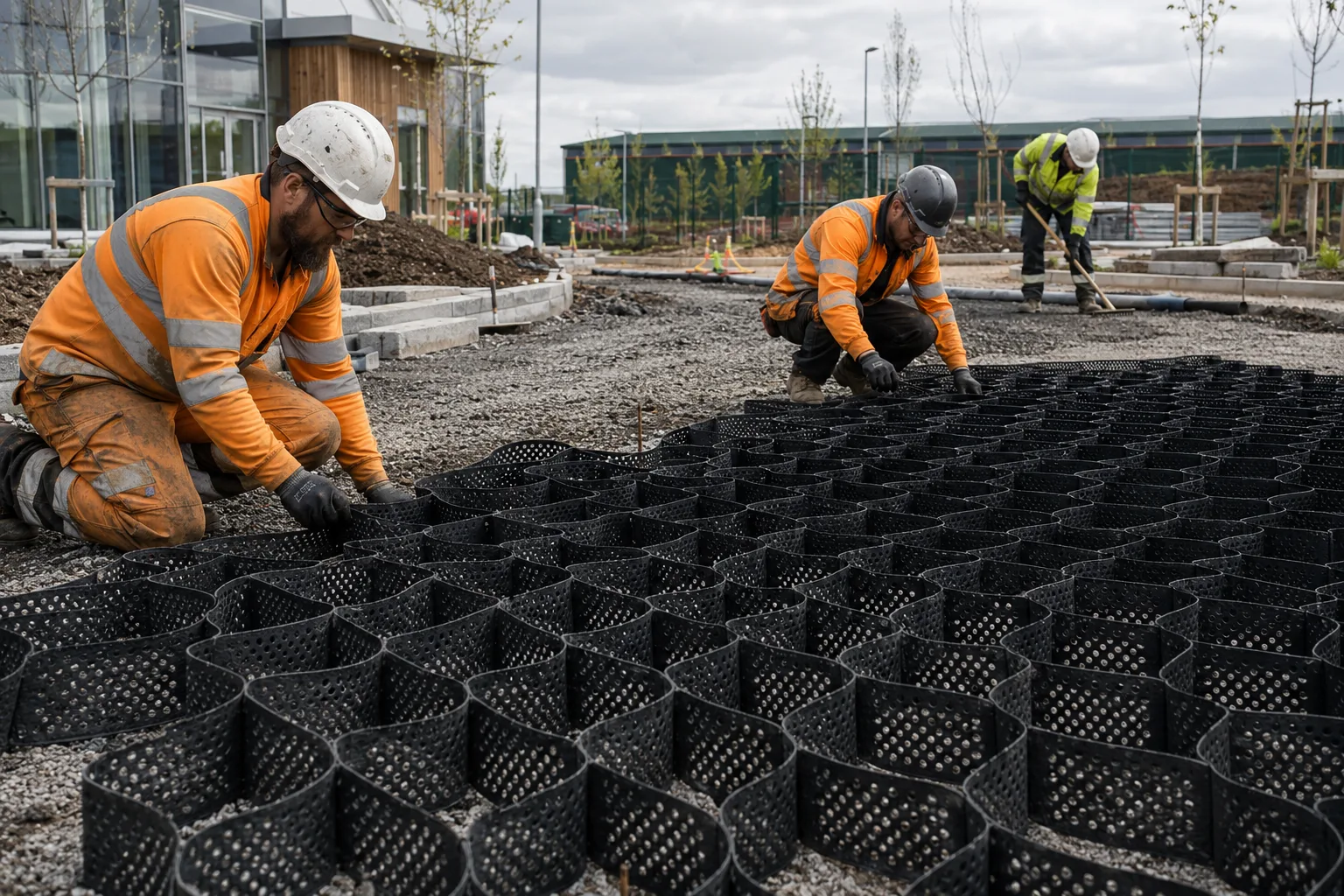
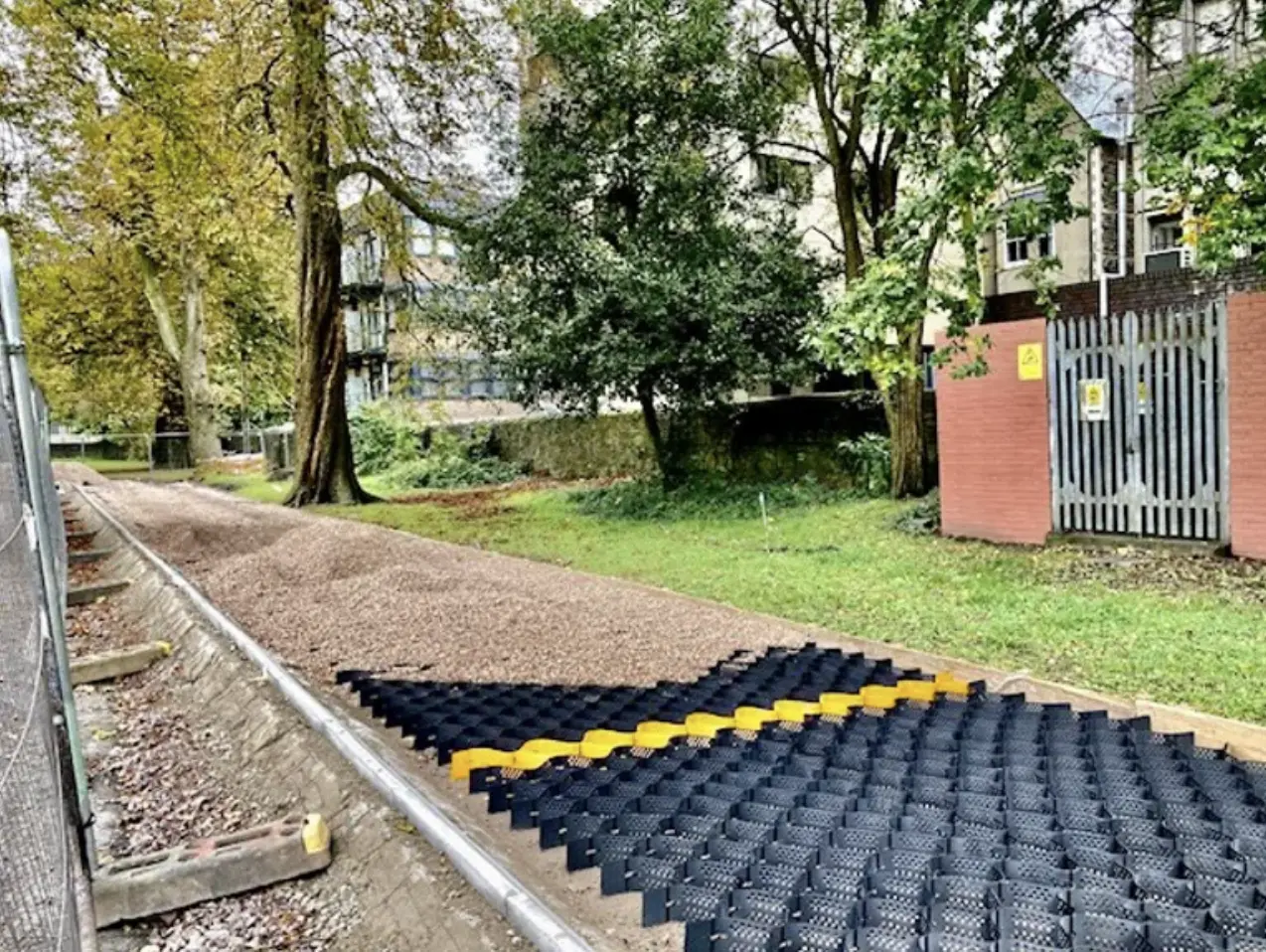
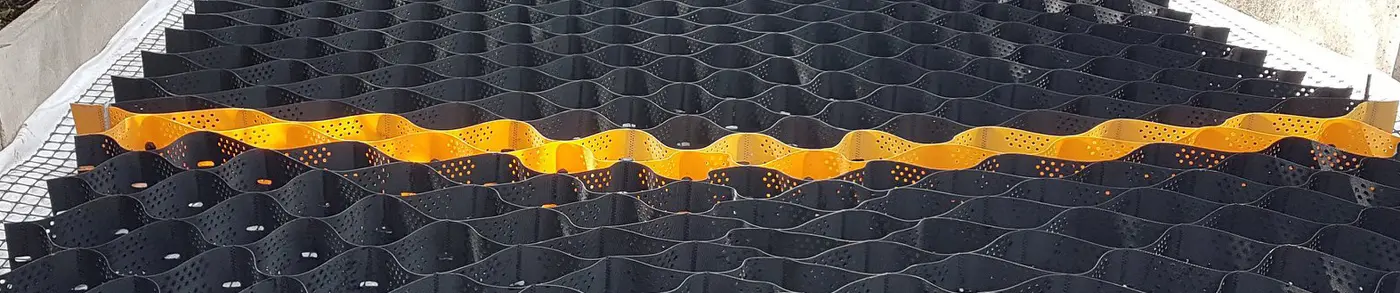
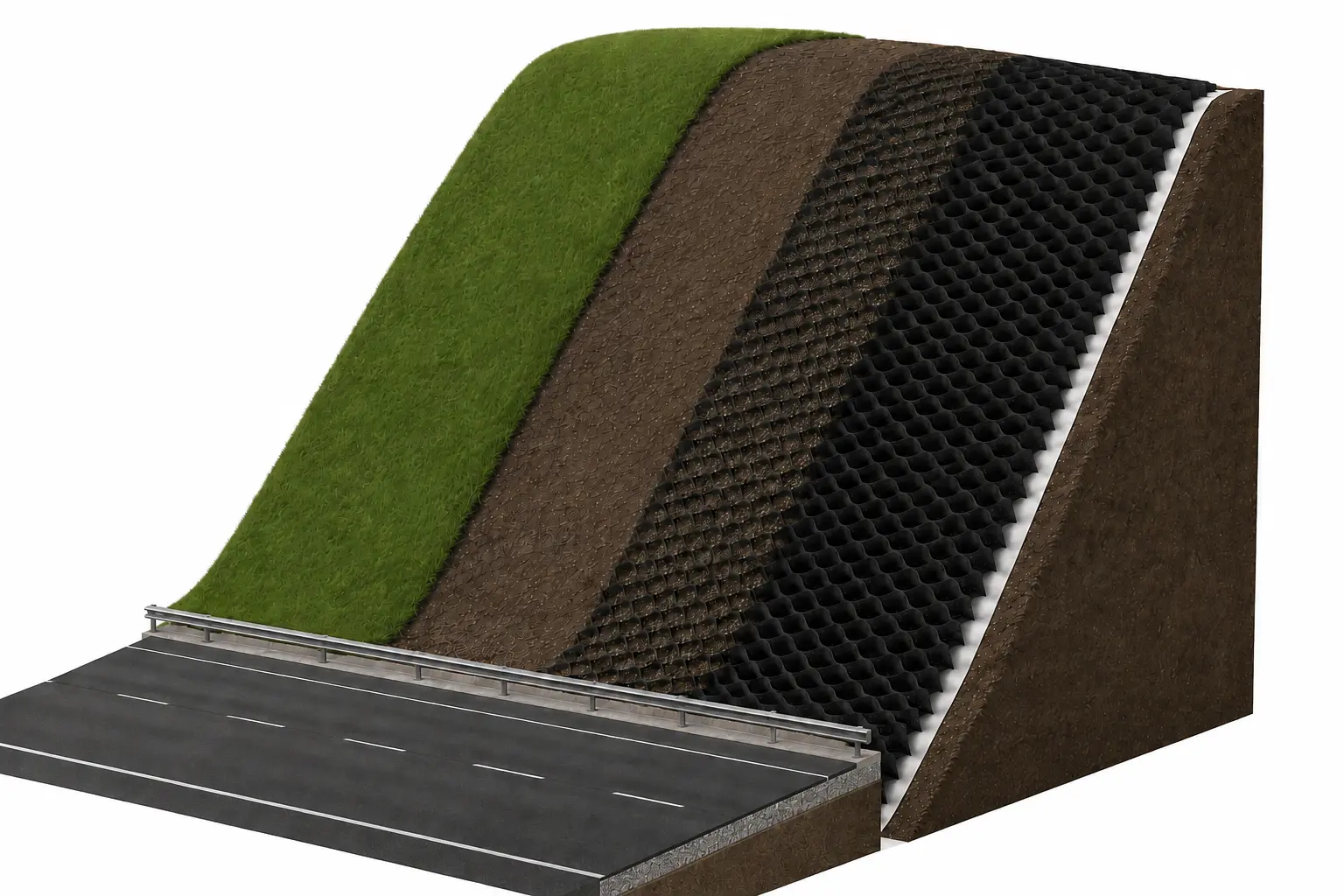
Expanded geocell creates connected pockets across the slope. When the cells are filled, they help retain the selected material and limit movement at the surface.
The cellular layer can support a vegetated or aggregate finish, but performance depends on the restraint, interfaces and water conditions as well as the geocell itself.
Confirm the wider slope first
Surface erosion and global slope stability are different issues. Geocell can address loss or movement of material at the face, but it does not prove that the underlying earthworks are stable.
Where the slope is failing, heavily loaded, retaining other ground or affected by water pressure, appropriately qualified geotechnical or structural input may be required before a surface system is considered.
Anchorage, crest and toe restraint
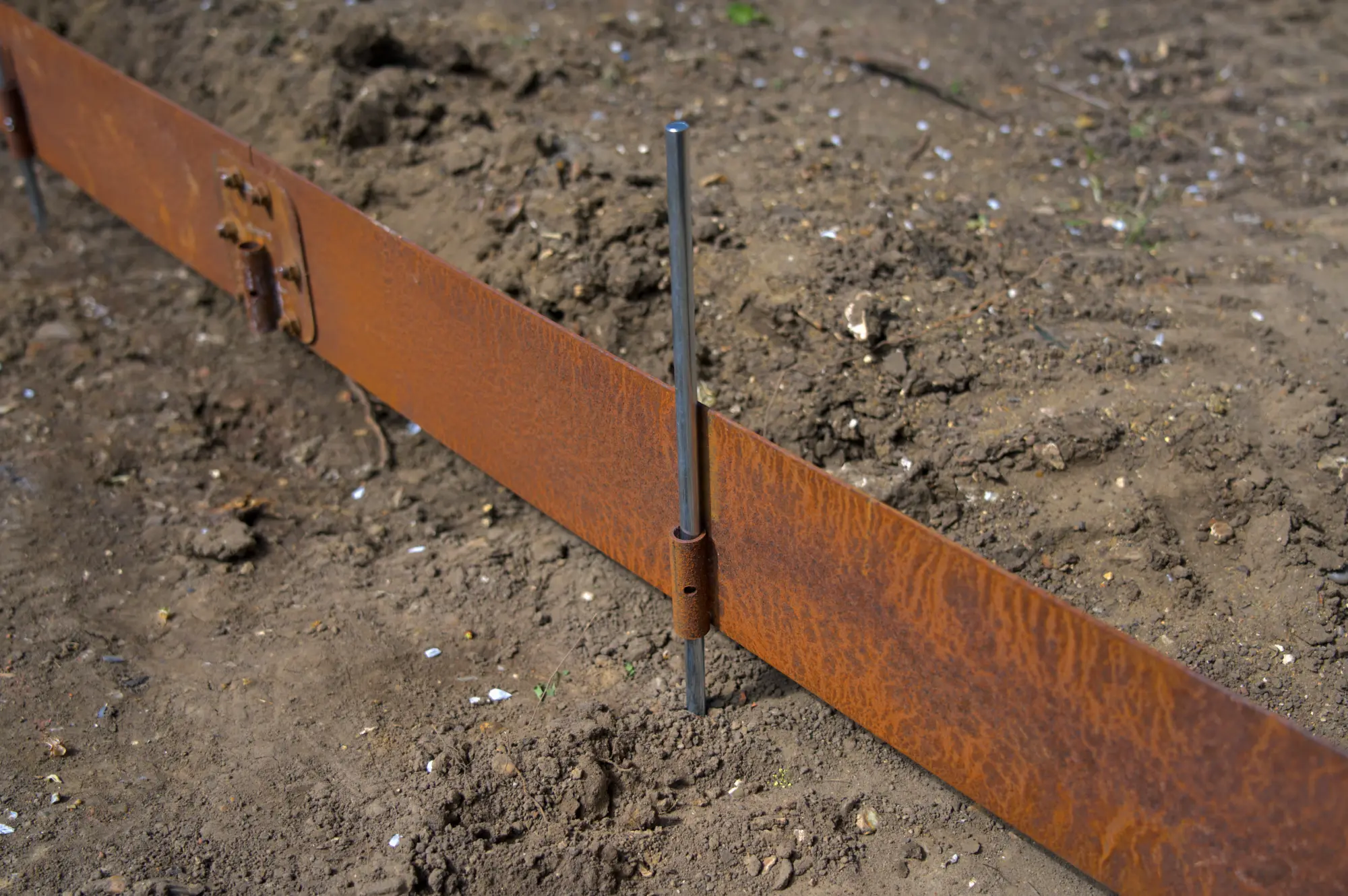
The restraint arrangement may include crest anchorage, face anchors, tendons and a toe detail. Type and spacing depend on the slope geometry, ground, cell depth, infill, water and available anchorage.
A generic pin pattern should not be copied across projects. Liners, services, shallow soil or restricted access can require a different approach.
Runoff and finish
Diffuse rainfall on a landscape bank is not the same as concentrated channel flow. Flow paths, outlets and the risk of infill loss need to be understood before selecting the cellular layer and finish.
For a vegetated slope, soil, planting, establishment and maintenance form part of the system. For a stone finish, grading, cell exposure and toe restraint need attention.
What to send for review
Clear photographs and a simple section are often enough to start a useful conversation. CORE can then identify the missing inputs that materially affect the system.
- Slope height, length and gradient
- Ground and surface condition
- Runoff, drainage and any concentrated flow
- Required finish or vegetation objective
- Restrictions on anchoring, access or installation
Evidence used for this guide
Questions about slopes and erosion control
What is the maximum slope for geocell?
A single maximum gradient is not a responsible selection rule. Geometry, ground, water, cell depth, infill and restraint all affect feasibility. Send the slope information for review.
Can geocell be installed over a liner?
Routine anchors must not puncture a waterproofing or containment liner. The protection and restraint strategy needs project-specific coordination with the liner designer and supplier.
Can geocell hold topsoil?
Selected soil can be used in some vegetated systems. Soil properties, cell depth, erosion exposure, planting and maintenance all need to suit the slope.